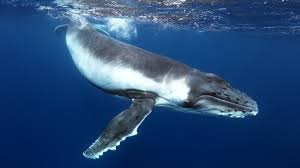
Blue Whale
Population stats
Population before becoming endangered
Population after becoming endangered
Percentage of population which decreased
Whales are found in oceans and seas around the world. They inhabit both cold and warm waters, from polar regions to tropical areas. The specific distribution of whales depends on their species and migration patterns. Some species, like the humpback whale, migrate over vast distances between feeding and breeding grounds, while others, like the sperm whale, are more solitary and can be found in deeper ocean waters. Generally, whales are most commonly observed in coastal areas and along major oceanic currents where food sources are abundant.
Critically Endangered.
They are actually carnivores, specifically they are krillivores. Blue whales can consume up to 4 tons (about 3,600 kilograms) of krill per day during the feeding season. They typically feed by lunging forward with their mouths open wide, engulfing large amounts of water along with krill.
Blue whales do not exhibit a strict diurnal (daytime) or nocturnal (nighttime) activity pattern like many terrestrial animals. Instead, their activity patterns are more influenced by their feeding behaviors and environmental factors rather than a day-night cycle.
The lifespan of blue whales is estimated to be around 70 to 90 years on average, although some individuals may live longer. Determining the exact lifespan of blue whales in the wild is challenging due to the difficulty of studying these large, migratory animals over their entire lifespan.
Blue whales typically give birth to a single calf at a time. While twin births have been documented very rarely in some whale species.
Adult Length: Adult blue whales are the largest animals known to have ever existed on Earth. They typically range in length from 70 to 90 feet (21 to 27 meters) on average. The largest confirmed blue whale measured was about 98 feet (30 meters) long. These dimensions make them longer than even the largest dinosaurs.
Newborn Length: Newborn blue whale calves are relatively large at birth compared to other mammals. They average about 23 to 26 feet (7 to 8 meters) in length. Despite their size at birth, they are much smaller than adult blue whales and undergo rapid growth during the nursing period.
Adult Weight: Adult blue whales are the heaviest animals known to have ever existed on Earth. They can weigh anywhere between 100 to 200 metric tons (110 to 220 short tons) on average. The largest individuals may weigh up to 200 tons or more. This immense weight is necessary to support their massive size and sustain their energy requirements for swimming and feeding on krill.
Newborn Weight: Newborn blue whale calves are also quite large at birth compared to other mammals. They typically weigh around 2.5 to 3 metric tons (5,500 to 6,600 pounds). Despite their size at birth, they depend entirely on their mother’s milk for nourishment and rapid growth during the nursing period.